
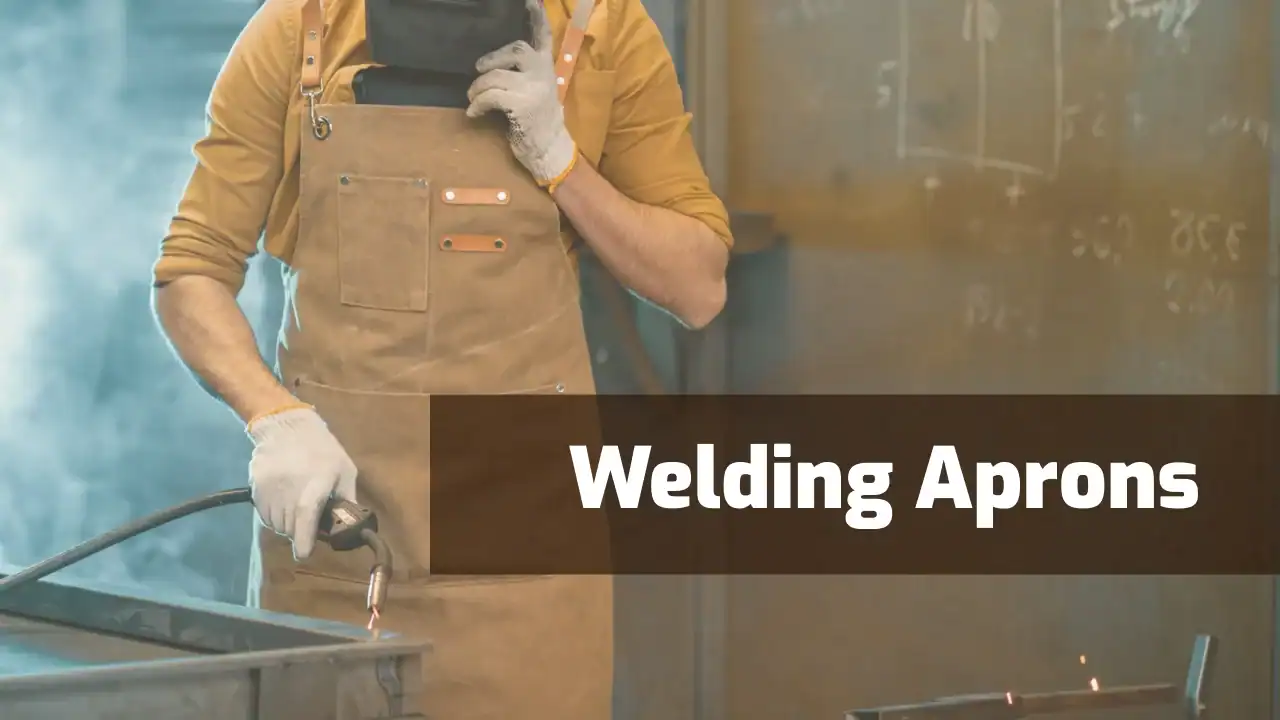
Not every welding apron belongs in every shop.
A leather apron that works perfectly for flux-core or heavy grinding can feel hot, stiff, and unnecessary during a day of bench TIG. On the other hand, an FR cotton apron that’s comfortable for light fabrication won’t last long under repeated slag and grinding sparks.
The best choice depends on the process, the amount of spatter, and where that heat actually lands.
For light bench TIG, I would rather wear a 9–12 oz FR cotton shirt or apron than fight a stiff leather bib all afternoon. For flux-core, overhead stick, or heavy grinding, I want split leather in front of me, and I want it long enough to cover my lap when I sit.
Here’s why…
Pick the Apron by Burn Path, Not by Brand Name
The first question is simple: where do sparks land when you actually work? If they hit your chest and fall cleanly to the floor, you need less armor than someone who sits at a bench with hot spatter landing in the lap.
MIG and stick punish the lower front of an apron. Grinding punishes pockets, seams, and folded edges because sparks collect there and keep burning longer than people expect.
The same logic applies when the welding bench is also used for grinding, sharpening, tool cleanup, or small repair jobs. If forged steel tools and other shop gear are handled on that same surface, the apron should stay away from oil, wax, leather dressing, and solvent overspray.
Heat and sparks are easier to manage when the protective gear has not picked up shop residue.
| Job in the shop | What I’d wear | Why |
|---|---|---|
| Bench TIG on clean parts | FR cotton or light leather bib | Better shoulder movement and less heat buildup |
| Short-circuit MIG | Medium split cowhide apron | Enough front coverage for normal BB spatter |
| Flux-core on dirty steel | Heavy split leather, plus sleeves if needed | Hotter spatter and slag beat up fabric fast |
| Stick repair work | Leather jacket or apron with sleeves | Rod angle and slag make exposure less predictable |
| Heavy grinding or cutting | Leather apron with covered pockets | Sparks collect in open pockets, cuffs, and folds |
OSHA’s hot-work PPE guidance points out the same basic hazard welders see every day: hot work throws heat, sparks, slag, and radiation, and protective clothing only works properly when it stays free of oil, grease, and solvents.
Leather Takes Abuse Better, but It Comes With Trade-Offs
Split cowhide earns its place around MIG, flux-core, stick, cutting, and grinding. It handles spatter better than FR cotton, and it gives you a little more grace when a hot part brushes your stomach or thigh.
That does not mean every leather apron works well. Thin leather may look good at a market stall, but it will not last long in front of slag, and heavy leather can pull on your neck until you start loosening it between welds.
FR Cotton Belongs Near Cleaner Work
FR cotton has a real place in welding, especially for TIG and light fabrication. It breathes better, moves better, and lets your shoulders work without the apron dragging against your torch hand.
The trouble starts when people treat FR cotton like leather. FR fabric can resist ignition, but repeated spatter will still chew it up, especially around the stomach, lap, and pocket edges.
For clean TIG, fitting, tack work, and short light MIG jobs, FR cotton makes sense. For a day of flux-core or stick, it becomes the wrong tool pretty quickly.
Pockets Are Where Aprons Get Stupid
Open front pockets look useful until a grinder fills them with hot grit. The same thing happens with rod stubs, slag, screws, and little pieces of wire that should never sit against your body.
If the apron has pockets, I want flaps or side placement. I do not want a deep front pocket sitting right under the spark path while I cut, grind, or chip slag.
This is one of those details a welder notices after one bad day. A pocket full of sparks teaches faster than any product description.
Fit Matters More Than People Admit
A bad apron fit changes how you work. If the neck strap carries all the weight, your shoulders tighten up, your hood position changes, and you start making little adjustments instead of watching the puddle.
Cross-back straps feel better on long jobs. They spread the weight and keep the apron from sliding every time you bend for a clamp, lead, grinder, or filler rod.
Length matters too. A short apron feels cooler, but it leaves your thighs open when you sit at a bench or lean into the work.
The Quick Shop Test Before You Trust It
Do not judge an apron while standing straight in front of a mirror. Put it on the way you work.
Try this before welding in it:
- Sit on a stool and check whether it still covers your thighs.
- Bend to pick up a stinger, grinder, or clamp.
- Reach across the table like you would during a tack-up.
- Check whether pockets open toward the spark path.
- Look at the stitching around the lower front and pocket corners.
- Wear it with gloves, sleeves, jacket, and hood, not over a clean T-shirt.
Aprons in Mixed Shops Need Extra Thought
A lot of welders work in shops that do more than welding. The same bench may see grinders, clamps, chisels, layout tools, leatherwork, sharpening, and repair work before the day ends.
That is where I would separate a general shop apron from welding PPE. A maker who keeps hand tools and repair gear etc, near the bench should still keep the hot-work apron clean, dry, and away from oil, wax, leather dressing, or solvent overspray.
This sounds fussy until a spark lands on contaminated material. Clean leather gives you protection; dirty leather can create a problem you did not need.
How I’d Choose for Each Process
For TIG, I choose mobility first unless the part carries serious heat. A lighter apron keeps the hands freer, especially on small stainless work, tubing, sheet, or anything that needs steady torch control.
For MIG, I move to split leather if spatter keeps marking the front of my shirt. Short-circuit MIG may not look violent, but a long afternoon of small BBs will find weak fabric.
For stick and flux-core, I do not gamble with light gear. I want leather coverage, sleeves when the position gets awkward, and no open pockets where slag can sit.
When an Apron Is Not Enough
An apron protects the front of the body. It does not protect your arms, collar, neck, cuffs, boots, or the gap that opens when you reach overhead.
If sparks run down your sleeves, add leather sleeves or a jacket. If slag hits your boots, use proper pants placement, high-top boots, or spats instead of blaming the apron.
Overhead work changes the whole answer. A bib apron alone does not make overhead stick or flux-core safe enough for a long repair.
Read more: Welding Safety Equipment
Maintenance Decides How Long It Stays Safe
Shake out the apron after grinding. Brush off grit, check the lower front for pinholes, and look hard at the stitching near pockets and ties.
Do not weld in gear with oil, grease, solvent, or fuel on it. Do not keep using leather that has burned thin in the same spot over and over.
A worn apron does not fail all at once. It usually gives you warnings first: stiff burned patches, loose stitching, shiny hard spots, pinholes, and pockets that collect trash.
Final Shop Call
Choose the apron that matches the heat and spatter you’re actually exposed to, not the one that looks toughest on the shelf.
FR cotton makes sense for cleaner work where mobility matters. Once slag, heavy spatter, or grinding sparks become part of the job, split leather is the better long-term choice.
A comfortable apron you’ll wear every day is worth more than heavy protection that spends most of its life hanging on a hook.